
Contest conducted by Marc Smith
This the final month before competitors in the 2026 annual competition start to drop their weakest scores. From next month on, with everyone’s best nine scores counting, those who missed a month earlier in the year will get back on par with those already on the leader-board. Will there be any dark horses joining the main contenders we have been following so far?
The world championships in Katowice, Poland finished early this month, and panel members were in action deep into both the Rosenblum and the McConnell Cups. In the Women’s event, a quarter-final meeting between Wenfei Wang’s Chinese team and the Polish squad spearheaded by Sophia and Cathy Baldysz guaranteed a medal for at least one panel member. The Poles won that encounter, but then had to settle for bronze medals as they lost by just 8 IMPs to another Chinese team in their semi-final.
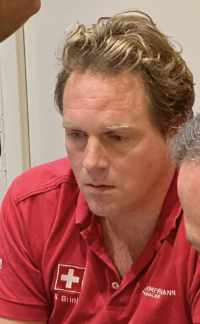
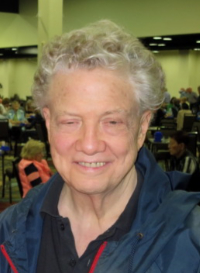
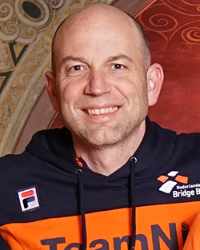
In the Open, we were also down to one team by the semi-final stage, with the panel’s hopes resting on the Fleisher team containing Sjoert Brink (right) and Cedric Lorenzini. In the semi-final, they defeated the USA/Israel team by 116-88. In the final, the opponents were a USA/Norway combination, and the result was remarkably similar, Fleisher winning 116-90. Congratulations to both Sjoert and Cedric, the panel’s latest world championship gold medalists.
This month’s guest panelist is the solo winner of the July competition, a tough set on which Mark Reeve from Vietnam scored a perfect 80/80. Mark learned to play while at university in Bristol, England and he was a regular congress attendee in his younger UK days. Mark is currently resident in Singapore, but still represents Vietnam, where he lived for the last 10 years with his wife Linh and daughter Vy. He says, “There's not much bridge played in Vietnam, but now that I am in Singapore I play the occasional game at the Geylang West bridge club. These days, though, I spend most of my free time training for Ironman triathlons.”
We have deals from the European Junior Championships and the Spingold final this month. We also have three contributed by panel members: Hand 3 from Larry Cohen, Hand 4 from Marty Bergen and Hand 5 from Rob Brady. Thanks to them. If you have a hand that you think would make an interesting problem for the panel to discuss, please send me the details.
An almost-full panel produce a majority vote on only two hands in this set, and are widely split on some of the others. This means that there are multiple ways to score fairly well on a number of hands. However, a cursory glance through the choices of early competition entrants leads me to believe that this will be a tough set on which to score highly.
The most popular action chosen by the competition entrants scores ‘10’ on only one of the eight hands, and voting with the largest group of competitors this month scores paltry 50/80 (way down from 65/80 in August). The average score this month is 49.32 (down from 52.58 on Set 26-08). Enough from me, let’s get to the action…
|
ACTION |
MARKS |
PANEL |
Competitors' |
|
Pass |
10 |
9 |
9 |
|
4NT |
9 |
2 |
7 |
|
5♦ |
7 |
6 |
41 |
|
6♦ |
6 |
4 |
12 |
|
5♥ |
6 |
1 |
2 |
|
Dbl |
4 |
3 |
27 |
|
4♠ |
0 |
0 |
1 |
Competition Entrant Average Score: 6.32
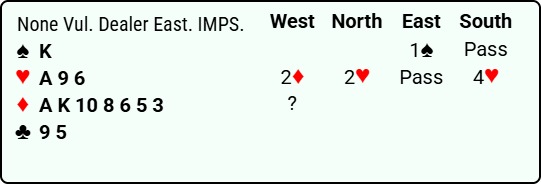
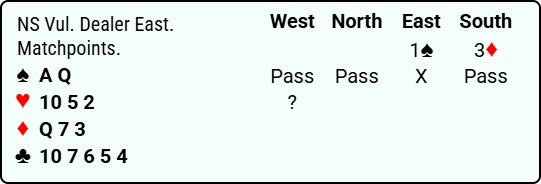
The panel is divided into four main camps: 6 panelists just bid game (5♦), 5 commit to slam (6♦ and 5♥), whilst 11 try to enlist partner’s help in choosing between 5♦ and 6♦ (Pass and 4NT). The fourth, and smallest, group thinks it is right to defend. I have marked each faction according to their support on the panel (although I think the 6♦ bidders have a better argument than those bidding 5♦).
The largest groups of competitors simply choose a contract without engaging partner in the decision-making process. Let’s start with the doublers…
DAVID BIRD: Dbl. I'm not confident about 5♦, so let's see how much we can take on defence.
SIMON DE WIJS: Dbl. Partner’s likely hand is a weak 5-1-2-5, or maybe some hand with two hearts. I think I just "take the money".
MARTY BERGEN: Dbl. I can't think of any hand with a singleton heart that would pass 2♥. So, if he has two hearts and almost certainly fewer than three diamonds, rather than make a forcing pass, I will double.
Some were a little more optimistic…
SARTAJ HANS: 5♦. Despite the opponents' bidding, I'm concerned that partner’s pass on the previous round suggests a doubleton heart.
BARNET SHENKIN: 5♦. It could easily could be right to double as I expect partner to have a minimum without three-card diamond support.
I’m not convinced. Does our 2♦ bid promise a five-card suit? Assuming not, will he always raise freely on a minimum with three-card support, particularly just three low?
CATHY BALDYSZ: 5♦.
The hands Brian suggests to justify caution are certainly possible…
BRIAN GLUBOK: 5♦. "Fairways and greens" - clients love golf cliches. Close second choice: 6♦ (but partner would have bid 3♦ with as little as AJxxx/x/Qxx/Axxx). It's easy to think that 6♦ must be a favorite, but he could have QJxxx/x/QJx/KQJx or AQxxx/xx/Jx/KQxx. We could still find our way to 6♦ after we bid 5♦ - might he not raise with something like AQxxx/x/Qx/A10xxx?
With that, would he not have bid 3♣ over 2♥?
LIZ McGOWAN: 5♦. If we make the reasonable assumption that partner has at most one heart, she may have a couple of diamonds. Pass puts her under too much pressure
SJOERT BRINK: 5♦. This feels right.
At the opposite end of the scale, some give up on the grand and settle for just the six-level…
JOEY SILVER: 6♦. Too much to do with too little space to do it in, so I will take the practical route by making only a small slam try.
CEDRIC LORENZINI: 6♦. Bid the contract you want to play. It may be down or we might be cold for seven, but this looks like the practical option.
I suspect Nicolai’s prediction of partner’s hand is unlikely to be far off…
NICOLAI HEIBERG-EVENSTAD: 6♦. It seems strange that partner didn’t take a call with what looks like short hearts, so I think his most likely hand is a weak 5-1-3-4 shape.
SOPHIA BALDYSZ: 6♦. Let’s hope partner has at least one ace for his opening bid. Partner would have bid over 2♥ with either six spades or five clubs, and the opponents will surely have nine hearts in this auction, so we are guaranteed a diamond fit.
Sally decides that she is worth a grand slam try on the way.
SALLY BROCK: 5♥. I will follow with 6♦ next. It’s hard to see 6♦ being a bad contract.
The rest choose to consult partner in one way or another, although they are not all in agreement as to how they intend to continue.
LARRY COHEN: Pass. While it’s unlikely that partner will do anything helpful, I might as well hear from him instead of making a decision like Double or 5♦ myself.
PAUL MARSTON: Pass. I have no clear action, so let partner have a say. I do not expect partner to hold three diamonds and a singleton heart.
Most plan on issuing a slam invite…
HANOI RONDON: Pass. This is a forcing pass situation. If partner doubles, showing his worst hand, I can then bid 5♦, showing a slam invitation.
MARK REEVE: Pass. I’ll start with a forcing pass, intending to pull Double or 5♣ to 5♦ to suggest slam interest. The bidding suggests that partner is short in hearts.

Alan answered this set on a train journey returning from a match with his England partner, John Holland, so we have insights from both of them this month.
ALAN MOULD & JOHN HOLLAND: Pass. It feels very like partner’s most likely hand is a weak 5-5 in the black suits. Even so, it looks like their high cards will be working. I pass and bid 5♦ next as a slam try. John also passes, but he plans on passing if partner doubles.
JILL MEYERS: Pass. This is a forcing auction, so I’ll hear what partner has to say then decide what to do. I play pass and pull the double is stronger than an immediate 5♦ so, if partner doubles (I think partner has a stiff heart) I will bid an invitational 5♦. Partner could also be 6/4 in the blacks and, if she bids 5♣, I will still bid 5♦. If partner bids 4♠, I may key-card myself to 6♦.
ROB BRADY: Pass. I'll pull partner’s double to 5♦ as a slam try and, over any other forward-going move (4NT, 5♣), I'll take a shot at 6♦. It's hard to construct hands partner can hold. His shape is likely to be 5-1-2-5, but many of those hands would bid 3♣ over 2♥. Even as little as Axxxx/x/Jx/Axxxx makes slam cold (3-1 diamonds), and partner will certainly accept my slam try with a heart singleton and aces.
ANDREW ROBSON: Pass. I may as well pass and find out more. Where are partner's 13 cards, though? He hasn't six spades, five clubs or three diamonds - wouldn't he bid over 2♥ with any of those? But, is he really 5-2-2-4? I doubt N/S would bid to 4♥ at equal vulnerability with only eight hearts. Anyway, let's wait a round with this forcing pass.
Zia hasn’t given up on higher things and is planning to bid slam anyway.
ZIA MAHMOOD: Pass. I start with a forcing pass. If all partner can do is Double, I’ll remove to 6♦. If he bids, say, 5♦, I’ll look for a grand.
A couple take an alternative route to an invitational 5♦.
PIERRE SCHMIDT & JOANNA ZOCHOWSKA: 4NT. 4NT can be either 6+♦/4♣ or a strong one-suiter (too strong for 5♦). Here, we know we will hear 5♣ (East did not repeat his spades, did not fit the diamonds, has short hearts...), and we will then advance with 5♦ and let partner judge his top cards.
MATS NILSLAND: 4NT. I must do something.
At the table, partner had AQ10xx/x/xxx/AJxx, so 7♦ was a decent spot. Is he supposed to bid 3♦ over 2♥ with this minimum when you could have only four diamonds? Some panel members seem to think he should, so it is something regular partnerships might find worthy of discussion.
The opponents’ pre-emption has made it difficult to get to the grand (although Zia might still manage it), but partner will clearly accept if you issue any kind of invitation to the small slam. Only the Doublers and the 5♦ bidders are likely to miss out.
|
ACTION |
MARKS |
PANEL |
Competitors' |
|
2NT |
10 |
7 |
8 |
|
3♦ |
9 |
5 |
15 |
|
3♣ |
9 |
4 |
10 |
|
3NT |
9 |
3 |
2 |
|
4♠ |
7 |
6 |
48 |
|
3♠ |
0 |
0 |
8 |
|
Pass |
0 |
0 |
6 |
|
3♥ |
0 |
0 |
1 |
|
4♣ |
0 |
0 |
1 |
|
4♥ |
0 |
0 |
1 |
|
4NT |
0 |
0 |
1 |
Competition Entrant Average Score: 6.65
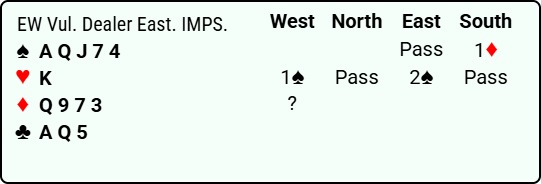
This one is impossible to mark, so I’m sure I’ll annoy some readers. The second-largest faction on the panel simply bid game in spades (as do almost half of competition entrants). However, 19-of-25 panelists prefer to investigate 3NT, and the question is how to do so. The largest single vote is for 2NT: however, some think this is natural and invitational, but some play it as forcing. The rest are split between making a try with 3♣ and 3♦, whilst the smallest faction simply jumps to 3NT. Having heard the debate, I see merit in 3♣, 3♦ and 3NT, although I do not really see why 2NT should be forcing here. With most of the panel looking for an alternative game, 4♠ seems to be the least popular of the options, hence the marking (but everyone scores fairly well).
I was hoping that the panel would tell us which sequence (3NT immediately or 3NT after 3♦) would strongly suggest 3NT is the right contract and which invites partner to correct to 4♠. Here, we clearly want him to correct to spades with a singleton diamond. With holdings such as J-x-x, K-x-x, or even 10-x, we are likely to be better off in 3NT. If our diamonds were K-Q-10, perhaps we would want to play 3NT even opposite a singleton. Regular partnerships might want to discuss how to differentiate between the various diamond holdings.
SALLY BROCK: 4♠. This should have some sort of play.
MARK REEVE: 4♠. Vulnerable against not at IMPs, one stretches to bid vulnerable games. I’ve been down before.
It sounds like both Liz and Sophia are worried that game might not be enough…
LIZ McGOWAN: 4♠. I shall not play partner for perfect cards. She does not have them.
SOPHIA BALDYSZ: 4♠. This depends on style. I'm going to assume that partner would cue bid with any sort of maximum pass and a fit, so he shouldn't have more than around 8 HCP.
…whereas Andrew contemplates stopping in 3♠.
ANDREW ROBSON: 4♠. Sorry partner, I can't take a joke. But partner is vulnerable... The other option is to make a game try and respect a sign off. Partner is likely to hold only five minor-suit cards (as he probably has five hearts, given North's failure to make a negative double - mind you, North may just have nothing).
Sartaj dabbles with the main issue before settling for game in the major.
SARTAJ HANS: 4♠. We could try to get to 3NT, but the heart suit may then be a big problem.
Both Marty and David start with 2NT, clearly intending it as natural and invitational.
DAVID BIRD: 2NT. This seems the most accurate game try available.
MARTY BERGEN: 2NT. Game could be cold opposite the perfect minimum, but I don't love this hand.
BARNET SHENKIN: 2NT.
But the other 2NTers don’t think passing is an option for partner…
JILL MEYERS: 2NT. I play this as forcing.
SJOERT BRINK: 2NT. Who knows what partner can come up with. This sounds forcing and looking for 3NT.
CEDRIC LORENZINI: 2NT. I will bid game, but 3NT may be the best spot.
MATS NILSLAND: 2NT. I haven´t decided yet. Let´s see partners reaction.
Nicolai offers an alternative way forward…
NICOLAI HEIBERG-EVENSTAD: 3♣. After a 3♠ signoff from partner, I’ll continue with 3NT and he can choose which game to play based on his red-suit holdings.
SIMON DE WIJS: 3♣. There is no harm in messing around. I am planning to bid 3NT next and partner can decide.
Brian provides a hand opposite which we clearly want to avoid 4♠.
BRIAN GLUBOK: 3♣. As a practical matter, I'd just bid 4♠ but, if partner can bid 3♥ over our 3♣ and then wants to pass 3NT… Indeed, why do we need to go down in 4♠ opposite something like Kxx/QJxxx/Jxx/Jx/ Cliche #2: What could go wrong?
Larry wouldn’t have started from here.
LARRY COHEN: 3♣. I am angling for a possible 3NT, but will settle for 4♠ otherwise. Yes, I might have doubled the first time.
Alternatively, should we start with a cue bid?
HANOI RONDON: 3♦. I think this is the way to go to offer partner a choice between 3NT and 4♠. I expect him to convert to spades with a singleton diamond. Opposite a holding like ♦J-x-x, 4♠ is likely to be hopeless.
ALAN MOULD & JOHN HOLLAND: 3♦. We agree on 3♦ here, although John would have started with a double on the previous round.
ZIA MAHMOOD/CATHY BALDYSZ: 3♦.
PIERRE SCHMIDT & JOANNA ZOCHOWSKA: 3♦. We will play a game but, if partner can bid 3♥, we will advance with 3NT. Hopefully, he can then judge what's best (4♠ or 3NT).
…Or just bid game in no-trumps?
JOEY SILVER: 3NT. With a lot of junky values, this hand looks more appropriate for a nine- rather ten-trick game.
PAUL MARSTON: 3NT.
ROB BRADY: 3NT. We're bidding game, but which one? I expect a 3♦ bid from the panel to gain quite a bit of traction, but what's the nuanced difference between that and just offering 3NT as a choice? Will partner pull with Kxx/Axxx/xx/xxxx? 3NT is not a command to pass once we have found a fit. Partner can look at their singleton diamond and correct to spades, or they could look at Kxx/Qxxx/Kxx/xxx and sit for 3NT. The main concern with just bidding 4♠ is that we could suffer diamond ruffs, so offering a choice must be correct.
On this deal from the European Under-26 Teams, West bid 3NT at the table and partner put down 10xx/Jxxx/AK/10xxxx. With the ♠K onside, 3NT could not be beaten, but 4♠ was doomed to fail (North had a 3-4-1-5 shape with the ♣K-J). I suspect that if you bid either 3♣ or 3♦ on the West cards, partner will surprise you by suggesting 3NT. He’ll certainly raise 2NT to game, whether it is forcing or not, and he’ll pass a jump to 3NT. Only the 4♠ bidders are likely to go minus.
|
ACTION |
MARKS |
PANEL |
Competitors' |
|
Pass |
10 |
12 |
30 |
|
3NT |
7 |
6 |
19 |
|
3♠ |
7 |
6 |
38 |
|
4♣ |
5 |
1 |
7 |
|
4♠ |
2 |
0 |
6 |
|
5♣ |
2 |
0 |
<1 |
Competition Entrant Average Score: 7.46
Not quite a majority vote from the panel, but a clear favourite this time, thankfully. The competition entrants are split into two camps, with nearly a third collecting top marks on this one.
SALLY BROCK: Pass. Let’s hope for a top via a penalty.
LIZ McGOWAN: Pass. At Pairs, -670 is just another bottom. I lead a heart.
LARRY COHEN: Pass. I am not happy about this choice, and now also not happy that I suggested this problem.
JILL MEYERS: Pass. It’s matchpoints, so let’s go for the magic +200.
NICOLAI HEIBERG-EVENSTAD: Pass. Tough problem. At matchpoints, I would pass and hope to get +200.
MATS NILSLAND: Pass. This is risky with long clubs, but it is matchpoints.

A number pointed out that the alternative to passing is far from clear…
DAVID BIRD: Pass. If I didn't want to defend, I'd have nowhere much to go anyway. I'll just be grateful that I have these defensive values.
ZIA MAHMOOD: Pass. Reluctantly, but nothing else jumps out at me.
HANOI RONDON: Pass. They're red. We're green. They're likely to go down. Besides, what could I bid if I choose not to pass?
SARTAJ HANS: Pass. Faced with a range of unpleasant choices (3♠, 3NT, 4♣ and Pass), I choose the one that may get us a top.
ANDREW ROBSON: Pass. It may well be right to bid, but I'd be guessing what to bid. So, I may as well shoot out a pass, with lots of ways for this to work.
ROB BRADY: Pass. At matchpoints, whenever the opponents offer us a chance at +200, we should seriously consider it. Here, we have a trump trick, a good lead, and no assurance that we will find our best contract if we instead try 3♠ or 4♣, as partner will reopen with a double on a wide range of shapes (6313, 5512, etc.)
The rest of the panel choose action…
SJOERT BRINK: 3♠. Experience has taught me that this isn’t enough for 3NT, so I am left with no other bid, although pass is certainly tempting.
JOEY SILVER: 3♠. At any other form scoring, I DO NOT stop short of game, (which one, don't ask) but, hey, this is pairs, where plus scores even get respect in the morning.
Sadly, Joey, this was the only way to go minus at the table. The danger with bidding 3♠ in this type of auction is that the trumps will often be 5-1-2-5 around the table.
ALAN MOULD & JOHN HOLLAND: 3♠. This is easily the toughest problem of the set. Pass would be my second choice at matchpoints, and maybe should be the first choice…4♣ is a distant third choice. John is still thinking…
BARNET SHENKIN: 3♠.
PIERRE SCHMIDT & JOANNA ZOCHOWSKA: 3♠. Pass, 3♠ and 3NT can all be good. We will Pass Fridays, Saturdays and Sundays, bid 3NT on Mondays, and 3♠ the other days. Today is Tuesday.
CEDRIC LORENZINI: 3♠. At matchpoints, I will bid the major first. My other option is 4♦, offering a choice of game (spades/clubs), but I am a little weak.
Some are willing to take a shot at game…
SIMON DE WIJS: 3NT. I will try for the game bonus. Let's hope partner has a couple of tricks on the side.
MARK REEVE: 3NT. Lots of things could be better, but 3NT is at least a game. Pass could work well, but I have too many values in partner's suit to be confident of this.
We even have family harmony in this camp.
SOPHIA BALDYSZ: 3NT. I am hoping for the best.
CATHY BALDYSZ: 3NT.
PAUL MARSTON: 3NT. Maybe 4♠ is better, but there are many ways for 3NT to win.
MARTY BERGEN: 3NT. With these conditions (matchpoints and favorable vulnerability), pass is tempting. But, my spade holding screams offense rather than defense, and most of my opponents are very conservative at unfavorable vulnerability.
There was just one soloist…
BRIAN GLUBOK: 4♣. This is definitely one of the top four choices (along with Pass, 3♠ and 3NT).
Unfortunately, Brian, the panel thought it was the fourth-best choice of the four. (Indeed, no one else even mentioned it.)
Larry reports that partner had Jxxxx/AKJx/none/AJ8x. Of the possible contracts, 3NT is likely to make and 5♣ can also be made (but it seems unlikely that partner will raise if you bid only 4♣). As mentioned earlier, 3♠ probably makes only eight tricks as trumps break badly. Even though declarer can kill your ♦Q, you have five winners (three hearts and two aces) against 3♦-doubled, so passing gets you +200 and a decent matchpoint score. (South had x/xxx/AJ1098xxx/K).
|
ACTION |
MARKS |
PANEL |
Competitors' |
|
3♦ |
10 |
13 |
32 |
|
3♣ |
8 |
7 |
19 |
|
Pass |
7 |
2 |
13 |
|
2♥ |
6 |
2 |
3 |
|
4♣ |
4 |
1 |
6 |
|
2♠ |
0 |
0 |
9 |
|
4♦ |
0 |
0 |
8 |
|
5♦ |
0 |
0 |
7 |
|
3♠ |
0 |
0 |
1 |
|
4♥ |
0 |
0 |
1 |
Competition Entrant Average Score: 6.05
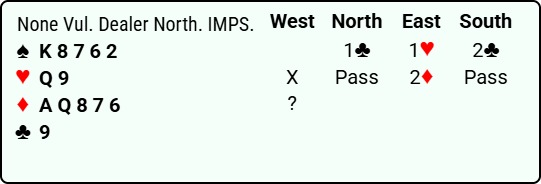
Marty Bergen sent me this problem, which was originally posed to The Bridge World’s Master Solvers’ Club some 30 years ago. The panel produces one of only two majority votes this month, and almost a third of competition entrants agree with them. Are they right, though? I’ll let Marty explain at the end.
SJOERT BRINK: 3♦. With five cards, I support.
SALLY BROCK: 3♦. This is surely constructive. Partner has room to rebid good hearts or spades.
ALAN MOULD & JOHN HOLLAND: 3♦. A straightforward choice for both of us.
LIZ McGOWAN: 3♦. Pass would be kinder to partner, but she could still have the right cards for game.
Can you construct a hand consistent with the bidding on which game is good?
MARK REEVE: 3♦. I am worth a positive noise but, unless partner has something extra, I can't see this hand reaching game.
Sartaj may be on to something here…
SARTAJ HANS: 3♦. Partner may be bidding a three-card suit in this situation.
ROB BRADY: 3♦. Our non-vulnerable opponents couldn't muster up any more than 2♣, so I think partner rates to have four of them. 1-5-3-4 is a likely shape but partner could hold something like x/AJ10xx/Kxxx/xxx, so I want to make a courtesy invite with 3♦. I just hate missing games at IMPs.
Would he not have bid 3♦ with that hand?
ZIA MAHMOOD/SOPHIA BALDYSZ/NICOLAI HEIBERG-EVENSTAD: 3♦.
PIERRE SCHMIDT & JOANNA ZOCHOWSKA: 3♦. We would love to bid 4♣ to show our exact distribution, but it seems to us that would be forcing to game. We can't punish our partner, who may have a light overcall.
SIMON DE WIJS: 3♦. Partner can easily have only three diamonds, so this bid is quite serious and should promise five trumps and a good hand. This is more an afterthought, because I've never seen partner bid on in these spots.
DAVID BIRD: 3♦. We don't know much about East's strength. Surely, I must raise the diamonds anyway. 3NT is not quite out of the mix.
Some thought the hand worth more than just a courtesy raise…
LARRY COHEN: 3♣. On Hand 3, I was sick and nothing appealed. Here, there are so many wonderful things I want to do.
CEDRIC LORENZINI: 3♣. Many options. I need a flexible bid.
JILL MEYERS: 3♣. This must show an invitational diamond raise.
We can all agree with that, but do we really have one?
MATS NILSLAND: 3♣. Difficult, because I am not sure I want to see 3NT.
CATHY BALDYSZ: 3♣.
BRIAN GLUBOK: 3♣. This is the perfect Alice in Wonderland bid: "A bid means what I want it to mean, nothing more and nothing less." In this case, I want it to show a really good diamond raise, a doubleton honor in hearts and a singleton club....
ANDREW ROBSON: 3♣. Well, let's show a good hand, diamonds implied as trumps, and see if partner can bid more than 3♦. He may well be 2-5-3-3, so we mustn't get over-excited.
Even more ambitious…
JOEY SILVER: 4♣. I have to start describing my hand somewhere, and splintering looks to be a good place to start.
I’m sure partner will be delighted when dummy appears!
Perhaps the next option would have attracted more support at matchpoints…
PAUL MARSTON: 2♥. I think this should show some useful values with a doubleton heart.
BARNET SHENKIN: 2♥.
HANOI RONDON: Pass. Partner might be in a tough spot, and he is likely to have only three diamonds. (He might have jumped to 3♦ with four.) And, I don't want to leave Marty as the only passer.
I’ll let the man who sent me the hand sum up.
MARTY BERGEN: Pass. A number of points... After the club raise, both non-vulnerable opponents had a chance to bid 3♣. Neither did, so they don't have a nine-card fit, thus partner has four clubs. (With any five, he'd pass the double.) Responder doesn't have four spades (no negative double), so partner has at least one spade. With partner having at least five black cards, his shape is very likely 1-5-3-4. The opponents rate to have roughly half the points, which leaves partner with 8-11 HCP only. So, I have no interest in game, particularly not one requiring eleven tricks. At matchpoints, I could understand bidding 2♥ here but, at IMPs, I prefer to play in my eight-card fit, so I think pass is clear.
How did the 30 panelists vote when the hand was first presented? Marty tells us that, “None passed!!! Four bid 2♥, but the other 26 made all sort of bids at the three and four-level!! Partner's exact hand isn’t known, but it is not really needed. Give him a random 1-5-3-4 8-10 count and you will quickly work out that we are not even close to making a game.”
Although only 7/10, a moral victory for Hanoi and Marty, I think.
|
ACTION |
MARKS |
PANEL |
Competitors' |
|
4♠ |
10 |
9 |
10 |
|
5♣ |
9 |
7 |
3 |
|
3NT |
7 |
5 |
59 |
|
4♣ |
6 |
1 |
1 |
|
6♣ |
5 |
2 |
3 |
|
4NT |
5 |
0 |
5 |
|
6NT |
4 |
1 |
3 |
|
4♥ |
0 |
0 |
13 |
|
Pass |
0 |
0 |
1 |
|
5♥ |
0 |
0 |
1 |
|
6♥ |
0 |
0 |
1 |
Competition Entrant Average Score: 5.98
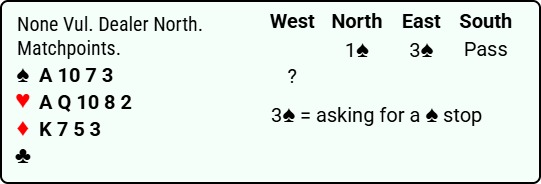
No majority vote from the panel, although just over half either bid 5♣ or head that way via a 4♠ cue bid. For many competitors, this was a simple problem, with well over half doing as partner asked and bidding 3NT with their spade stopper. They got some support from the panel…
SJOERT BRINK: 3NT. This asks for a stop, and I have one... So, I bid 3NT.
SARTAJ HANS: 3NT. Partner may have already got us to an average-plus position by his choice of bid. I feel bidding slam is misguided as partner's suit is completely solid only in the textbooks, and not in real life.
SALLY BROCK: 3NT. Partner surely should have more than a solid suit.
ALAN MOULD & JOHN HOLLAND: 3NT. I am torn between 3NT and 6♣, but I’d settle for 3NT at matchpoints. John think 5♣ is clear, which shows the difference in what we think 3♠ shows!!
MARTY BERGEN: 3NT. It obviously could be right to bid 5♣, and even 6♣ could be cold opposite the perfect hand. But perfect hands are very rare. It's far from clear to me that having seven solid clubs is enough for the jump cue bid but, if that’s what he has, 3NT could still make if he has something like ♥J-x.
Only the French were willing to stop short of game.
PIERRE SCHMIDT & JOANNA ZOCHOWSKA: 4♣. 3NT, 4♣ or 5♣? Who knows if partner has the ♥J or the ♦Q? We've changed our mind three times before selecting our bid. I would have tried 3NT.
Jill and Andrew are both worried that game might not be enough, but are restrained by the void in partner’s suit…
JILL MEYERS: 5♣. This seems like the best option, just in case partner's clubs turn out not to be 100% solid.
ANDREW ROBSON: 5♣. Tricky! Has partner just got eight solid clubs? Or does he have a side ♦A? At matchpoints, I hate to go down in a slam, so I’ll take the middle of the road with 5♣. After all, partner's clubs may not be quite as solid as he thinks.
David is more concerned about which game.
DAVID BIRD: 5♣. Bidding 3NT and finding I have no entry to the dummy is not an entertaining prospect. I would have to bid 4♣ on a bust, and my extras must be worth an extra level.

Mark raises the key question for regular partnerships to discuss.
MARK REEVE: 5♣. I would like to check our agreements. Does 3♠ just ask for a spade stop, or does it show a solid (club) suit and nothing else outside, like a Gambling 3NT? If partner can have some scattered outside values, I abstain, but otherwise I bid 5♣, as I think sensible defence will keep me out of dummy in 3NT. I have too many good cards to not bid game, though.
I was hoping the panel would answer those questions, but there seems to be quite a range of expectations.
BRIAN GLUBOK: 5♣. Stop me if you've heard this one: a priest, a rabbi, and a reverend go golfing in a foursome with a prominent televangelist…
Brian mentioned ‘Alice in Wonderland’ in his previous answer… evidence suggests that he is clearly ‘The Mad Hatter’.
MATS NILSLAND/CATHY BALDYSZ: 5♣.
The largest faction on the panel attempts to have their cake and eat it by starting with a cue bid…
HANOI RONDON: 4♠. I have a huge hand if partner has what I think he has promised. This is the way to go forward scientifically but, if all he can do is bid 5♣, I’ll give up.
LARRY COHEN: 4♠. I can't risk playing in no-trump when partner might not have an entry. If he thinks he has a little something extra, he can (unlikely) bid 6♣, but I will settle for 5♣, which is the right spot opposite, say, xx/xx/xx/AKQJ10xx.
NICOLAI HEIBERG-EVENSTAD: 4♠. Partner often has running clubs and another card. I’ll make a slam try with 4♠.
CEDRIC LORENZINI: 4♠. I have a big hand, and we can easily have a slam in clubs.
LIZ McGOWAN: 4♠. I am making it up on the hoof. Partner should understand that I want to play in her suit so, if she has some outside stuff as well as solid clubs, she will bid slam. When the clubs turn out to be not so solid, I shall take the blame.
PAUL MARSTON: 4♠. A slam try in clubs. I expect partner to shoot 6♣ with a solid suit and a card. At least that is my story.
SIMON DE WIJS: 4♠. Let's show partner that we have a good hand. Partner can be pretty wide ranged here, I guess, but I'm willing to give up on 3NT just made.
BARNET SHENKIN: 4♠. 3NT could be right, but it seems not so gutsy.
Rob has clearly forgotten that he sent me this hand.
ROB BRADY: 4♠. Partner should have more than just seven solid clubs for this bid, and both the ♥K or the ♦A provide an entry. I'm tempted to just blast 6NT, figuring that whichever of these cards partner holds gives us eleven top tricks, and we have a likely twelfth from a strip-squeeze against opener. But, I wonder just how "solid" partner's clubs need to be. If he has a hand like xx/Kx/Ax/AKQ10xxx, 6♣ makes but 6NT needs the clubs to run (although this might not be a bad gamble at matchpoints). I'll force to slam and we may have a chance at a grand in the auction 4♠-6♣- 6♠-7♣-7NT.
Just a few were prepared to commit to slam…
JOEY SILVER: 6♣. I’d rather avoid playing a minor-suit game at pairs. I might have considered bidding 3NT but, with my club holding, there may not be easy access to dummy. To be consistent, I will still avoid 5♣, while making sure the contract is played from the right side.
ZIA MAHMOOD: 6♣.
…And Sophia goes for all the matchpoint marbles.
SOPHIA BALDYSZ: 6NT. Am I sure that partner and I have cards from the same board? I expect partner to have something like seven or eight solid clubs plus something on the side. I can't see how I'm going to find out if he has the ♦A and short hearts that would give the grand slam play. I hope he has an entry to those clubs, such as the ♥K. At IMPs 6♣ is probably safer.
In practice, it’s unlikely that we could get this hand ‘right’ as partner had the hand that some panelists feared (although most expected at least a bit more): xx/x/xxx/AKQxxxx. Even so, the auction does raise a number of interesting questions for regular partnerships to discuss. Is 4NT quantitative? Is 4♦ asking for a shortage (as it would over a Gambling 3NT opening)? What do follow up bids mean if we choose 4♠, and partner makes the likely 5♣ reply? What should we expect if partner bids 4NT over our 4♠? Plenty of food for thought.
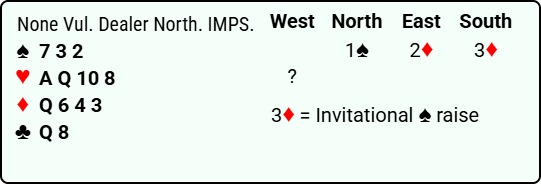
|
ACTION |
MARKS |
PANEL |
Competitors' |
|
3♠ |
10 |
11 |
11 |
|
3♥ |
8 |
7 |
12 |
|
5♦ |
7 |
4 |
9 |
|
Dbl |
5 |
2 |
24 |
|
4♦ |
4 |
1 |
30 |
|
Pass |
0 |
0 |
14 |
Competition Entrant Average Score: 5.09
Although there is no majority vote on the panel and there is support for three main options, but they do produce a clear favourite. More than two thirds of competition entrants make up the three largest groups, but their choices garner between them only three panel votes. Let’s start with the couple of panelists who support one of those options…
PIERRE SCHMIDT & JOANNA ZOCHOWSKA: Dbl. Is there a trap here?
CATHY BALDYSZ: Dbl.
The French clearly think the meaning of double is clear. Readers might like to check what their regular partner would make of a double: does it show hearts? …hearts and diamonds? …a diamond raise not strong enough to bid at the four-level? …or perhaps it is lead directional (eg K-x, A-x)?
Marty was the only other panelist to support one of the competitors’ favoured actions.
MARTY BERGEN: 4♦. I see three possible actions (Double, 3♠ and 4♦). Although we could belong in 3NT, it’s unlikely that we could both make it and get to play there, so I'll settle for 4♦.
Some prefer to up the ante further…
SIMON DE WIJS: 5♦. A cute 3♥ comes to mind, but I'm bidding on over 4♠ anyway, so I'm not doing it. I know: sometimes partner needs to lead heart against 5♠, but I prefer to put maximum pressure on the opponents in these situations.
JOEY SILVER: 5♦. God knows which is more important, pre-emption or a heart lead. Since the opening bidder is sitting over me, it is the five-level for me.
MATS NILSLAND: 5♦.
PAUL MARSTON: 5♦. I am hoping that at least one side makes game.
So, what about 3♥?
BARNET SHENKIN: 3♥. For the lead.
SJOERT BRINK: 3♥. So that partner will find the correct lead...
SALLY BROCK: 3♥. It somehow feels right. At least it gets partner off to the right lead!
ANDREW ROBSON: 3♥. I am sliding in this bid for the lead. Who knows, we may even be able to make 5♦?
DAVID BIRD: 3♥. Stirring the pot usually increases the flavour of its contents. Let's see what happens.
ZIA MAHMOOD: 3♥.
LARRY COHEN: 3♥. For now. This won't end the auction and, if we end up on defense, I get the lead I want. Future decisions await.
Jill has reservations about 3♥.
JILL MEYERS: 3♠. I would love to bid 3♥ for the lead but, with four bidders, I am not so sure that is forcing. I will settle for 3♠, which shows the diamond fit and some values.
For most, trying to reach our right contract is more important than helping partner with the lead against the opponents’ game.
SOPHIA BALDYSZ: 3♠. Invitational with a diamond fit.
ALAN MOULD & JOHN HOLLAND: 3♠. We are in agreement on this one. The opponents show a good raise, so we show a good raise 😁
BRIAN GLUBOK: 3♠. They cue bid, so I cue bid, otherwise we lose face.
LIZ McGOWAN: 3♠. A bit pushy, I suppose, but rhythmic.
CEDRIC LORENZINI: 3♠. I show the diamond fit and values.
MARK REEVE: 3♠. Almost certainly partner is a minimum, but I'm not ashamed of my hand, so I will make what I think is the value bid. What I do next time, assuming 4♠-Pass-Pass-? remains to be seen and, thankfully, I don’t have to answer than one here.
Nicolai makes a point which I think tips the debate in favour of this faction…
NICOLAI HEIBERG-EVENSTAD: 3♠. Very tricky. This is close between 3♠ and 3♥? I prefer 3♠ as partner then knows for sure about the diamond fit if North now bids 4♠.
HANOI RONDON: 3♠. Showing hearts might be dangerous, but showing a good hand and support seems the way to go.
SARTAJ HANS: 3♠. It might be our hand in 3NT or 5♦, and this is the best way of involving partner.
Rob also makes a valid point…
ROB BRADY: 3♠. The question to ask is, "When are we willing to defend 4♠?" My answer is that I'll defend if partner doubles. So, while I'd like to try a 3♥ bid as a lead-direct, partner will never double 4♠ after I do this, and I'll be stuck bidding 5♦ anyway. Starting with 3♠ lets partner know we have a diamond fit and some defense, bringing him into the final decision.
On this deal from the Spingold final, partner had x/xxxx/AKJxxx/xx. At the table, West doubled and subsequently defended 4♠ (which was -420). In the replay, East started with a 3♦ overcall, so West had an easy save in 5♦ (-50). The 3♠ bidders seem likely to get partner to bid 5♦ when North bids 4♠. What he will do facing a 3♥ bid is an interesting question. How confident are you that he’ll think 5♦ is obvious?
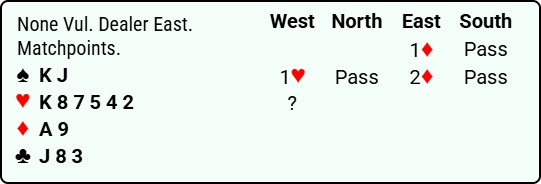
|
ACTION |
MARKS |
PANEL |
Competitors' |
|
2NT |
10 |
14 |
15 |
|
2♠ |
8 |
8 |
10 |
|
2♥ |
5 |
2 |
21 |
|
3♦ |
5 |
0 |
3 |
|
3♣ |
4 |
1 |
7 |
|
3♥ |
2 |
0 |
31 |
|
3NT |
0 |
0 |
8 |
|
Pass |
0 |
0 |
3 |
|
4♥ |
0 |
0 |
1 |
Competition Entrant Average Score: 4.40
I thought this was the most difficult problem of the set. The hand came up in a class and, when the student asked what they should bid, I had no good answer. The majority of the panel opt for an invitational 2NT with a sizeable minority preferring an artificial, game-forcing 2♠. More than half of competition entrants make up the two largest groups, and they are also split two ways, but between an option (2♥) that attracts the support of just two panelists and one (3♥) that barely merits a mention.
When Aaron Jones joined Rob to discuss the problems on the Bradybot YouTube feed, Aaron pointed out that bidding 3♥ on that suit could be a real disaster. For a start, do you really want to play 4♥ opposite a holding such as the singleton ♥J? Even worse, imagine partner with something like a 3-0-7-3 shape, and you could go down in 3♥ with 5♦/6♦ cold.
SALLY BROCK: 2♥. Constructive and an underbid!
BRIAN GLUBOK: 2♥. There are lots of good options here … 2NT, 3♦, 3♥ are all okay too.
No one else even mentioned 3♦ or 3♥, but there was support for Brian’s fourth option…
MATS NILSLAND: 2NT. This hand is just a little bit too good for 2♥.
PAUL MARSTON: 2NT. An underbid for sure, but I am not convinced no-trumps is the best strain.
SIMON DE WIJS: 2NT. It looks weird, but 3NT is the most likely game and I want to play it from my side. A mild underbid, but with good diamonds partner will usually bid on.
LIZ McGOWAN: 2NT. Who knows? I certainly don't.
SJOERT BRINK: 2NT. I am hoping partner can bid 3NT.

CEDRIC LORENZINI: 2NT. A very difficult choice. At matchpoints, we are probably heading for no-trumps, so I bid 2NT and see what happens.
ANDREW ROBSON: 2NT. Nobody bid spades, so partner probably has three. His most likely shape is 3-1-6-3. This invite feels best.
NICOLAI HEIBERG-EVENSTAD/BARNET SHENKIN: 2NT.
JOEY SILVER: 2NT. I am old and afraid, especially of scoring minus playing pairs. So, I take a very conservative approach. I might even pass a 3♦ rebid.
ROB BRADY: 2NT. As a point of discussion for regular partnerships, I prefer to use the cheapest new suit as a "third suit game force" in sequences where opener rebids their minor, so I am torn between 2NT and 2♠. Our hand is only worth an invite on values, with such a weak heart suit and stray jacks, despite the 12 HCP. However, it could still be right to play this hand in diamonds, hearts or no-trump, and our invite doesn't get that picture across. 2♠ has the advantage that we can explore for the right strain and, even if we end up too high, sometimes we make it for a top. At IMPs it's usually right to stretch and force to game whereas, at matchpoints, it's often right to stay low and try to go plus on this type of hand, which just tips me into the 2NT camp.
Only a couple think that 2NT is forcing in this auction.
ZIA MAHMOOD: 2NT. Forcing for one round.
JILL MEYERS: 2NT. I play this as a one-round force, so let's see what partner bids.
MARTY BERGEN: 2NT. I'm happy with my diamond holding but, with no aces in the side suits and my strong belief in opening light, I'll settle for an invitation. Obviously, jumping to 3NT would also risk missing a heart contract. FYI: Many years ago, I invented a convention based on the fact when one of us had a six-card suit, 2NT was unlikely to be our correct contract. Therefore, on auctions such as this, responder's 2NT rebid was a one-round force, with an invitational or better hand. It provided a convenient, economical forcing bid, and demanded that opener show shortness and hand strength. Larry Cohen and I used this successfully in our partnership in the 1980s.
The rest decided the hand was worth a game force.
SARTAJ HANS: 2♠. When every bid is a lie, choose the cheapest lie.
HANOI RONDON: 2♠. A forcing bid in order to get more information from partner.
DAVID BIRD: 2♠. I can't tell our best denomination yet, so I'll make a low-level forcing bid.
CATHY BALDYSZ: 2♠.
ALAN MOULD & JOHN HOLLAND: 2♠. This is a clear 2♠ bid for us. Yes, it’s not very attractive, but we never bother downgrading at matchpoints. John plays ‘em too well for that!
PIERRE SCHMIDT & JOANNA ZOCHOWSKA: 2♠. We have plenty of time to exchange more information.
SOPHIA BALDYSZ: 2♠. It would be nice in 2NT was forcing here, but I don’t think it is. Partner can easily have ♥A-x or ♥Q-x (or even three hearts) and/or a stiff club, in which case 4♥ will be better than 3NT.
LARRY COHEN: 2♠. I hope this isn't game forcing and, even if it is in theory, I plan to pass if all partner can do is bid 3♦ next.
Only Mark prefers to force in his longer black suit.
MARK REEVE: 3♣. With this suit, I don't really want to play 4♥ opposite a stiff or a small doubleton, so I will fake a bid to push for 3NT. If partner doesn't bid 3♥ next, I will go there. Again, been down before.
At the table, partner had xx/Ax/Q108xxx/AKx so 4♥ was the optimum contract, although not guaranteed to make. 2♠ is very likely to get you to that spot but, after 2NT, I’d guess partner will choose between Pass and 3NT, neither of which is likely to produce a plus score.
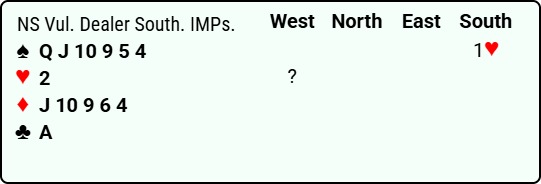
|
ACTION |
MARKS |
PANEL |
Competitors' |
|
1♠ |
10 |
7 |
25 |
|
4♠ |
9 |
6 |
5 |
|
3♠ |
9 |
6 |
8 |
|
2♥ |
6 |
4 |
39 |
|
2♠ |
4 |
2 |
19 |
|
Dbl |
0 |
0 |
1 |
|
3♣ |
0 |
0 |
1 |
Competition Entrant Average Score: 6.77
We finish with a straightforward two-part question. Firstly, do we describe this as a two-suited hand or bid our six-card spade suit? Secondly, if we are going to bid spades, how many?
For the panel, the answer to the first question was emphatic, with a 21-4 vote in favour of bidding spades. How many spades was a much closer run thing, with little to choose between the three most popular choices. For the competition entrants, more than a third choose to show the hand as a two-suiter, and another significant faction opt for the one spade bid (2♠) that the panel did not think was right. We’ll start with those panelists who agree with the largest group of competitors, where we at least have partnership agreement…
SOPHIA BALDYSZ: 2♥. I want to get both of my suits in.
CATHY BALDYSZ: 2♥.
LIZ McGOWAN: 2♥. No bid is ideal, but this seems most likely to help partner make future decisions.
ROB BRADY: 2♥. I was dealt two suits for a reason, right? I could understand a 4♠ bid to try and put the maximum pressure on immediately but, with the ♣A and a heart, sometimes partner wants to defend, and I'm happy to do so.
The rest opt to bid their major at various levels. Let’s start with the most conservative…
JOEY SILVER: 1♠. I can think of two good reasons not to make a two-suited overcall. My values outside my suits, (ie the stiff ♣A) and, more importantly, my chunky six-card spade suit.
MATS NILSLAND: 1♠. I like 2♥ to have more defensive values, and spade jumps are not my style.
HANOI RONDON: 1♠. The diamonds are terrible for Michaels, so it seems better to start low with our good spades.
ZIA MAHMOOD: 1♠.
MARK REEVE: 1♠. The imbalance between spades and diamonds leads me away from Michaels. Neither 2♠, 3♠ nor 4♠ feels right to me with this hand. I will keep it simple by bidding my longest suit at the cheapest level.
SARTAJ HANS: 1♠. I have seen bids like 4♠ on such hands work very well, but I do not have the stomach for it.
Paul offers a fair summary of the problem.
PAUL MARSTON: 1♠. By a process of elimination: the spades are too good for Michaels, the hand is too shapely for 2♠ or 3♠, and 4♠ is too positional.

The next option seems to me to be neither fish nor fowl…
LARRY COHEN: 2♠. There is nothing wrong with having full values every now and then.
DAVID BIRD: 2♠. I expect there will be votes for four different spade bids. I don't see much need to be pre-emptive.
Going up…
SALLY BROCK: 3♠. I have to do something at favourable.
ALAN MOULD & JOHN HOLLAND: 3♠. I think 3♠ looks normal, but John is firmly in the 1♠ camp.
BARNET SHENKIN: 3♠. Some may try 4♠.
PIERRE SCHMIDT & JOANNA ZOCHOWSKA: 3♠. Old fashion... Many would bid 4♠ nowadays at these colors.
CEDRIC LORENZINI: 3♠. We need to pré-empt. 4♠ is also possible, but seems a bit too much.
SJOERT BRINK: 3♠. I’d like to bid 4♠, but I would have to say to the people, “Don't try this at home.” So, better to be a little conservative.
And, finally, those who opt for the penthouse.
JILL MEYERS: 4♠. What else at this vulnerability?
NICOLAI HEIBERG-EVENSTAD: 4♠. I want to put maximum pressure on the opponents.
ANDREW ROBSON: 4♠. It's what I would bid at the table, acknowledging all the points about how “It's 3♠ that makes them guess,” and “They'll just double 4♠,” etc. If it goes (1♥)-3♠-(4♥)-P-(P) to me, I will feel sick in the pit of my stomach, and I can't bear that!
A very valid point, for sure.
SIMON DE WIJS: 4♠. It's that evil vulnerability that made me do it, partner.
MARTY BERGEN: 4♠. Although I'd obviously prefer a seventh spade, I'm a BIG believer in each of the following: a) The ecstasy of having favorable vulnerability for a potential pre-empt; b) bidding 4♠ against opponents' present or likely 4♥; c) Since "5-5 come alive" is cause for a great deal of exuberance, 6-5 is even better; and d) Appreciating the awesome value of having mucho intermediates in my long suits.
BRIAN GLUBOK: 4♠. Not a sound bid, but it makes you seem like a tough opponent and word gets around. "Favorable vulnerability is a different form of the game...." - I promise that's my last cliché for the month 😊.
This problem was faced by 32 West players in the Under-21 and Under-26 Teams events at the European Youth Championships. The voting there was 2♥ (14), 3♠/4♠ (6 each), 1♠ (3) and 2♠/3♦/3♥ (1 each). Partner had Kxx/J9xx/Kxx/Jxx. N/S could make 4♥ and 5♣, and you can make nine tricks in spades. The most common result was 4♠-doubled down one.
Andrew’s comment certainly raises a valid question: if you bid 1♠ or 2♠, what action, if any, do you plan to take if it continues 4♥-Pass-Pass back to you? If you bid 3♠, partner may solve your problem by bidding in front of you.

This was clearly a tough set, with only 10-of-25 panelists returning scores in the 70s. Leading the way this month is American multiple world champion Jill Meyers with a score of 76/80. Also from USA, Rob Brady finishes just a point back in second place, with 75/80. Completing the podium, with a score of 74/80, are Chile’s Hanoi Rondon and Norway’s Nicolai Heiberg-Evenstad. ‘Chapeau’ to you all.
As always, our thanks to all of the panelists for the time and effort they devote to both educate and entertain our readers.
See you all again next month. Marc.
|
Jill MEYERS |
Pass |
2NT |
Pass |
3♣ |
5♣ |
3♠ |
2NT |
4♠ |
76 |
|
Rob BRADY |
Pass |
3NT |
Pass |
3♦ |
4♠ |
3♠ |
2NT |
2♥ |
75 |
|
Nicolai HEIBERG-EVENSTAD |
6♦ |
3♣ |
Pass |
3♦ |
4♠ |
3♠ |
2NT |
4♠ |
74 |
|
Hanoi RONDON |
Pass |
3♦ |
Pass |
Pass |
4♠ |
3♠ |
2♠ |
1♠ |
74 |
|
Mats NILSLAND |
4NT |
2NT |
Pass |
3♣ |
5♣ |
5♦ |
2NT |
1♠ |
73 |
|
Zia MAHMOOD |
Pass |
3♦ |
Pass |
3♦ |
6♣ |
3♥ |
2NT |
1♠ |
72 |
|
Andrew ROBSON |
Pass |
4♠ |
Pass |
3♣ |
5♣ |
3♥ |
2NT |
4♠ |
71 |
|
Cedric LORENZINI |
6♦ |
2NT |
3♠ |
3♣ |
4♠ |
3♠ |
2NT |
4♠ |
70 |
|
Liz McGOWAN |
5♦ |
4♠ |
Pass |
3♦ |
4♠ |
3♠ |
2NT |
2♥ |
70 |
|
Alan MOULD |
Pass |
3♦ |
3♠ |
3♦ |
3NT |
3♠ |
2♠ |
3♠ |
70 |
|
Sartaj HANS |
5♦ |
4♠ |
Pass |
3♦ |
3NT |
3♠ |
2♠ |
1♠ |
69 |
|
Paul MARSTON |
Pass |
3NT |
3NT |
2♥ |
4♠ |
5♦ |
2NT |
1♠ |
69 |
|
Sjoert BRINK |
5♦ |
2NT |
3♠ |
3♦ |
3NT |
3♥ |
2NT |
3♠ |
68 |
|
Larry COHEN |
Pass |
3♣ |
Pass |
3♣ |
4♠ |
3♥ |
2♠ |
2♠ |
67 |
|
Mark REEVE |
Pass |
4♠ |
3NT |
3♦ |
5♣ |
3♠ |
3♣ |
1♠ |
67 |
|
Barnet SHENKIN |
5♦ |
2NT |
3♠ |
2♥ |
4♠ |
3♥ |
2NT |
3♠ |
67 |
|
Simon DE WIJS |
Dbl |
3♣ |
3NT |
3♦ |
4♠ |
5♦ |
2NT |
3♠ |
66 |
|
Pierre SCHMIDT & Joanna ZOCHOWSKA |
4NT |
3♦ |
3♠ |
3♦ |
5♣ |
Dbl |
2♠ |
3♠ |
66 |
|
David BIRD |
Dbl |
2NT |
Pass |
3♦ |
5♣ |
3♥ |
2♠ |
2♠ |
63 |
|
Sally BROCK |
5♥ |
4♠ |
Pass |
3♦ |
3NT |
3♥ |
2♥ |
3♠ |
62 |
|
Brian GLUBOK |
5♦ |
3♣ |
4♣ |
3♣ |
5♣ |
3♠ |
2♥ |
4♠ |
62 |
|
Cathy BALDYSZ |
5♦ |
3♦ |
3NT |
3♣ |
5♣ |
Dbl |
2♠ |
2♥ |
59 |
|
Sophia BALDYSZ |
6♦ |
4♠ |
3NT |
3♦ |
6NT |
3♠ |
2♠ |
2♥ |
58 |
|
Marty BERGEN |
Dbl |
2NT |
3NT |
Pass |
3NT |
4♦ |
2NT |
4♠ |
58 |
|
Joey SILVER |
6♦ |
3NT |
3♠ |
4♣ |
6♣ |
5♦ |
2NT |
1♠ |
58 |
|
|
|
|
|
|
|
|
|
|
|
|
TOP SCORE |
Pass |
2NT |
Pass |
3♦ |
4♠ |
3♠ |
2NT |
1♠ |
|
|
HAND 1: |
Pass 10 |
4NT 9 |
5♦ 7 |
6♦/5♥ 6 |
Dbl 4 |
|
|
HAND 2: |
2NT 10 |
3♣/3♦/3NT 9 |
4♠ 7 |
|
|
|
|
HAND 3: |
Pass 10 |
3♠/3NT 7 |
4♣ 5 |
4♠/5♣ 2 |
|
|
|
HAND 4: |
3♦ 10 |
3♣ 8 |
Pass 7 |
2♥ 6 |
4♣ 4 |
|
|
HAND 5: |
4♠ 10 |
5♣ 9 |
3NT 7 |
4♣ 6 |
4NT/6♣ 5 |
6NT 4 |
|
HAND 6: |
3♠ 10 |
3♥ 8 |
5♦ 7 |
Dbl 5 |
4♦ 4 |
|
|
HAND 7: |
2NT 10 |
2♠ 8 |
2♥/3♦ 5 |
3♣ 4 |
3♥ 2 |
|
|
HAND 8: |
1♠ 10 |
3♠/4♠ 9 |
2♥ 6 |
2♠ 4 |
|
|
|
HAND 1: |
6.32 |
|
HAND 2: |
6.65 |
|
HAND 3: |
7.46 |
|
HAND 4: |
6.05 |
|
HAND 5: |
5.98 |
|
HAND 6: |
5.09 |
|
HAND 7: |
4.40 |
|
HAND 8: |
6.77 |

